I Am Tichborne
The History

Who was the Tichborne Claimant?

The real case that fractured Victorian society along the fault lines of class, faith, and truth itself.

The Disappearance

Sir Roger Tichborne, heir to one of England's most prestigious estates, was a slim, French-speaking aristocrat who disappeared at sea in 1854. Following the capsizing of the ship Bella off the coast of South America, the Tichborne family eventually presumed him dead, but his mother, Lady Henrietta Tichborne, refused to accept his loss. She embarked on a decade-long search, placing advertisements in newspapers globally, including those in Australia.

The Wagga Wagga Connection

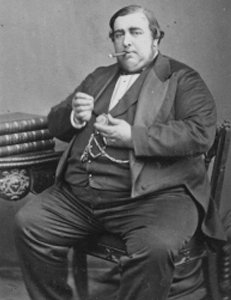
In 1865, a man emerged from Wagga Wagga, Australia, claiming to be the lost baronet. Known locally as Thomas Castro, this butcher was physically vastly different from the refined Roger, weighing significantly more and possessing no knowledge of the French language or Roger's classical education. Nevertheless, when he arrived in Europe in 1867, his mother instantly accepted him as her son, granting him a generous annual allowance of £1,000.
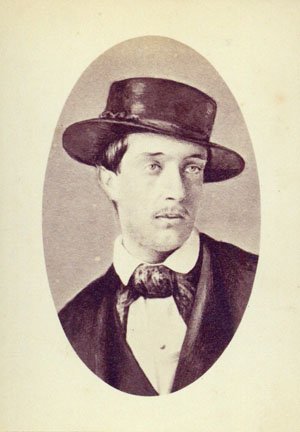
Historical photograph of Roger Tichborne Roger Tichborne
Historical photograph captioned Arthur Orton The Claimant

The Trials that Divided a Nation

The rest of the Tichborne family denounced him as an impostor, launching a massive investigation to prove his true identity. They believed he was Arthur Orton, a butcher's son from Wapping, London, who had last been seen in Australia. The ensuing legal battle became a Victorian sensation, pitting the aristocratic Establishment against a working class that viewed the Claimant as a champion of the poor being denied his birthright.

The Verdict

The legal saga culminated in two of the longest trials in English history. In 1874, after a criminal trial lasting 188 days, a jury found him guilty of perjury and declared him to be Arthur Orton. Sentenced to 14 years' hard labour, he served 10 years before dying destitute in 1898.

But in a final, enigmatic gesture, the Tichborne family permitted a card bearing Sir Roger's name to be placed on his coffin.

Cultural Impact

The birth of “Tichbornia”

The Tichborne Case was not just a trial; it was a 19th-century cultural phenomenon that fractured British society along the fault lines of class, religion, and the very concept of truth. Sometimes described as the Victorian-era equivalent of a modern celebrity trial, its impact was so pervasive that it spawned a phenomenon known as “Tichbornia.”

The “Working Class Hero” vs. the Establishment

The case became a proxy for class warfare. The Claimant, Arthur Orton, a stout, unrefined butcher from Wagga Wagga, was embraced by the working class as a victim of a conspiracy by the landed gentry. To his supporters, it didn't matter if he was a fraud; he was one of their own trying to reclaim a birthright from a corrupt aristocracy. This fervour led to the Magna Charta Association, a radical political movement that even saw the Claimant's lawyer elected to Parliament.

Merchandise & Media

The trial created one of the first truly modern media spectacles. The Claimant became a cause célèbre as people all over Britain avidly followed his fortunes. Factories churned out Tichborne-themed teacloths, ceramics, figurines, slippers, and even alphabet books for children.

The Claimant funded his legal battle by selling “Tichborne Bonds” to the public — crowdfunding before the internet existed — promising to pay them back once he inherited his estates. Public houses and music halls were filled with plays, comic songs, and musical numbers like the “Tichborne Gallop.” Newspapers and periodicals devoted much text to the case, as well as cartoons and satirical poems.

Lasting Legacy

A parable of identity, 150 years on

The case became a parable of identity that has fascinated writers for over 150 years.

Brat Farrar (1949) by Josephine Tey
A crime novel about a missing heir, adapted for BBC Radio 4 in 2025.
The Tichborne Claimant (1998)
A film directed by David Yates — who later directed several Harry Potter films — dramatising the trial.
“The Principal and the Pauper”, The Simpsons (1997)
Reveals Principal Skinner to be an impostor, in a storyline based on the Tichborne Case.
The Fraud (2023) by Zadie Smith
A historical novel focusing on the trial, explored through the eyes of housekeeper and star witness Andrew Bogle.
Want to Know More?

Further reading & listening

Books

The Claimant: The Extraordinary Story of the Australian Butcher Who Said He Was a Baronet Paul Terry, 2016
The Man Who Lost Himself: The Unbelievable Story of the Tichborne Claimant Robyn Annear, 2002 — often cited as a definitive work
The Tichborne Claimant: A Victorian Sensation Rohan McWilliam, 2007
The Claimant Michael Gilbert, 1972 — a fictionalised account

Podcasts

Dark Histories — “The Tichborne Claimant: A Tale of Two Butchers”
British Scandal — “The Case of the Missing Aristocrat”
The History Listen (ABC) — featuring Robyn Annear
The Historical Crimes and Criminals Podcast — multi-part series